- Original release
- Previous episode S03E1579 - Arnaque du siècle (1/2) : ces escrocs qui ont…
- Number S03E1580
-
External links
YouTube page
-
Last update
26 juin 2026 - 14:20
on 11 databases
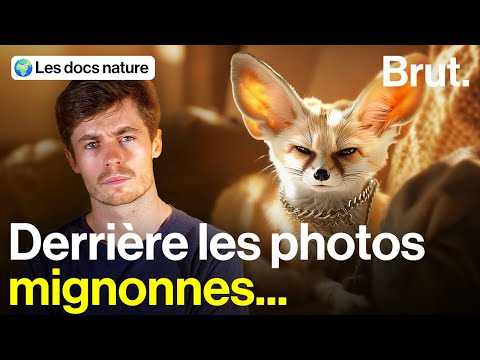
Pourquoi les fennecs "de compagnie" inquiètent
LES DOCS NATURE. Des fennecs découverts en France, en Belgique, à des milliers de kilomètres de leur habitat naturel… Des touristes qui se font prendre en photo avec ces animaux captifs… Ces phénomènes en pleine expansion inquiètent ONG et scientifiques. En fait, en avoir un chez soi comme animal de compagnie, ce n'est pas forcément interdit, mais ça pose de nombreuses questions. Le fennec peut-il vraiment être un animal de compagnie comme les autres ? Pourquoi ces pratiques inquiètent ? C'est ce que Lucas a cherché à comprendre pour ce nouvel épisode des docs nature.
⚠️ Rendez-vous tous les dimanches à 10h pour un nouvel épisode de notre série "Les docs nature" : https://www.youtube.com/playlist?list=PLr5Ypg9Nqo3PCCpSwCPeWaWWPxpJbWczc
? Pour ne rien louper des vidéos Brut, n'hésitez pas à vous abonner et à activer la cloche : https://www.youtube.com/channel/UCSKdvgqdnj72_SLggp7BDTg/?sub_confirmation=1
? Sources principales :
– Le fennec dans la liste rouge des espèces menacées ➔ https://www.iucnredlist.org/fr/species/41588/46173447
– Le guide du WWF États-Unis/Japon sur les animaux de compagnie "exotiques" ➔ https://www.worldwildlife.org/pages/exotic-pet-suitability-guide#fennec-fox
– Plus d'infos sur Rosalie recueillie en avril 2023 par la Tanière ➔ https://www.youtube.com/watch?v=1u22qKgny9Y
https://lataniere-zoorefuge.fr/la-taniere-accueille-une-jeune-fennec/
– Plus d'infos sur le fennec trouvé en Belgique en février 2023➔ https://www.facebook.com/Natuurhulpcentrum/videos/natuurhulpcentrum-woestijnvosje-gevangen/756616675655774/
– Présentation d'El Amine Khechekhouche sur le fennec et notamment son alimentation ➔ https://www.researchgate.net/profile/Khechekhouche-El-Amine/publication/331968828_Place_des_rongeurs_dans_le_regime_alimentaire_du_Fennec_Vulpes_zerda_Zimmermann_1780_dans_le_Sahara_septentrional_Est_region_du_Souf_Algerie/links/5c962a9592851cf0ae929de9/Place-des-rongeurs-dans-le-regime-alimentaire-du-Fennec-Vulpes-zerda-Zimmermann-1780-dans-le-Sahara-septentrional-Est-region-du-Souf-Algerie.pdf
– Données sur le commerce international (2006-2012) ➔ https://conbio.onlinelibrary.wiley.com/doi/abs/10.1111/cobi.12448
– Données sur les fennecs importés en Asie depuis le Soudan (2006-2015) ➔ https://www.traffic.org/site/assets/files/3119/eastward-bound-cites-exports-africa-asia-vfinal.pdf
– Données sur les fennecs importés aux Pays-Bas (2010-2020) ➔ https://www.eurogroupforanimals.org/files/eurogroupforanimals/2023-03/2023_03_efa_EU%20Positive%20List_White%20Paper.pdf
– Présentation du fennec par le zoo de San Diego ➔ https://ielc.libguides.com/sdzg/factsheets/fennec-fox
– Page du fennec sur le site de la CITES ➔ https://www.speciesplus.net/#/taxon_concepts/8895
– L'article de Tonga Terre d'accueil sur les fennecs utilisés pour les touristes ➔ https://www.association-tonga.com/le-tourisme
00:00 Introduction
01:38 Un renard des sables fascinant
03:24 Un nouvel animal de compagnie ?
06:39 Des problèmes pour les humains ?
08:40 Quels impacts pour eux ?
12:50 Conclusion

In an era where information is both abundant and overwhelming, finding reliable sources can be challenging. This is where "BLAST - Le souffle de l'info" comes into play—a refreshing new Web TV series dedicated to delivering insightful news, inquisitive investigations, and cultural explorations. As an independent platform, Blast aims not only to inform but also to empower its audience by sharing stories that matter. With four seasons and over 1418 episodes already available, there's more than enough content for viewers who crave authentic journalism.
The inaugural episode of Blast sets the tone for what viewers can expect from this dynamic series. It introduces the vision behind the project with a compelling manifesto and announces plans for a major campaign—an invitation for viewers to participate in shaping the future of media. From political editorials to long-form investigative pieces, Blast covers various topics while encouraging dialogue among its audience. The show’s approach is distinct; it seeks not just to report news but also encourages participation through social equity investments—viewers can even become shareholders in the platform!
As you delve deeper into Blast's episodes, you'll discover how they tackle pressing issues head-on. Episode two highlights their funding campaign on KissKissBankBank, underlining their commitment to revealing financial scandals and documenting reality from multiple perspectives. This episode emphasizes collaboration with other independent media outlets and NGOs—a vital aspect of producing truthful journalism in today's complex landscape. Each episode builds upon the last with rich narratives that engage viewers while prompting them to think critically about current events.