- Original release
- Previous episode S01E147 - L'origine des 7 péchés capitaux
- Number S01E148
- Country United States
- Genres Documentary, Special Interest
-
External links
YouTube page
-
Last update
27 avril 2026 - 19:14
on 11 databases
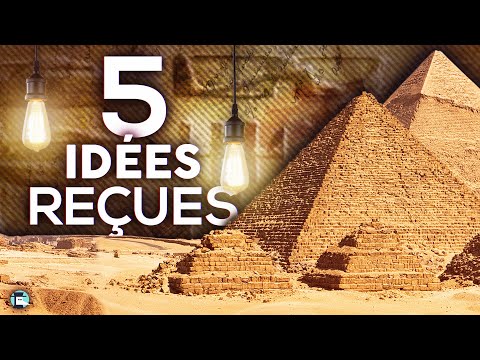
5 idées reçues sur l'Egypte antique - Nota Bene
Ah, l’Égypte ancienne…le berceau de la bullshiterie et des théories extraterrestres ! C’est pour ça qu’on l’aime non ? On aurait jamais eu Stargate sans les égyptiens alors ils méritent notre respect ! Cette civilisation est tellement fascinante qu’elle a donné lieu à un nombre incalculable de légendes depuis l’Antiquité. Justement, dans cette vidéo, on va s’attaquer à cinq de ces idées reçues, dont certaines flirtent parfois avec la théorie du complot…Allez, c’est parti !
? Écrit par Benjamin Brillaud et Simon Thuault
➤ La chaîne de Simon "le Phare à On" : https://www.youtube.com/channel/UCAGS6NZLc6IgKawROgYG3oA
? Montage par Dead Will : https://www.youtube.com/channel/UCtLkNuzB2_j2z7SFdvkiCww
Sous-titres en anglais par Toby Bromfield//English subtitles by Toby Bromfield.
————————————————————————————————————————————
➤➤➤ Sources en fin de description
————————————————————————————————————————————
?Pour s’abonner et soutenir ma chaîne?
https://www.youtube.com/channel/UCP46_MXP_WG_auH88FnfS1A/join
?Chaîne Nota Bonus? https://www.youtube.com/channel/UCrbbgYjbrXVYRM_iRGEDqFw
————————————————————————————————————————————
?Découvrez ma boutique en ligne?
➜ https://nota-bene.creator-spring.com/
————————————————————————————————————————————
?Vous pouvez acheter mes ouvrages en suivant ce lien ?
➜ https://www.notabenemovies.com/ouvrages/
————————————————————————————————————————————
?Rejoignez-moi sur les réseaux !?
➜ Twitch : https://www.twitch.tv/notabenemovies
➜ Facebook : http://facebook.com/notabenemovies
➜ Twitter : https://twitter.com/NotaBeneMovies
➜ Instagram : https://www.instagram.com/notabenemovies
➜ TikTok : https://www.tiktok.com/@notabenemovies
➜ Tipeee : https://www.tipeee.com/nota-bene
➜ Site internet : https://www.notabenemovies.com/
➜ Podcast : https://www.notabenemovies.com/podcasts/
————————————————————————————————————————————
➤➤➤ Pour en savoir plus :
————————————————————————————————————————————
Ampoules de Dendéra
- S. Cauville, Le temple de Dendera. Guide archéologique, IFAO, BiGen XII, Le Caire, 1990
- S. Cauville, Dendara V-VI : traduction et index phraséologique. Les cryptes du temple d’Hathor (2 vol.), OLA 131-132, Peeters, Louvain, 2004
- E. Chassinat, Le temple de Dendara, Tome Cinquième, IFAO, Le Caire, 1952
- H. Kees, « Die Schlangensteine und ihre Beziehungen zu den Reichsheiligtümern », ZÄS 57, De Gruyter, Berlin, 1922, p. 120-136
Hiéroglyphes tank et char
- J.A. Roberson, « Anatomy of a Palimpsest: the not-so-strange case of the ‘Abydos Helicopter’ », KMT 27 (1), 2016, p. 61-66
- P. Brand, The Monuments of Seti I: epigraphic, historical and art historical analysis, PdÄ 16, Brill, Leiden, 2000
- Cl. Vandersleyen, L’Égypte et la vallée du Nil 2. De la fin de l’Ancien Empire à la fin du Nouvel Empire, PUF, Paris, 1995
Pyramides : esclaves et outils
- J.C. Moreno-Garcia, « La population mrt : une approche du problème de la servitude dans l’Égypte du IIIe millénaire », The Journal of Egyptian Archaeology 84, Egypt Exploration Society, Londres, 1998, p. 71-83
- A. Loprieno, « Slavery and Servitude », UCLA Encyclopedia of Egyptology, Los Angeles, 2012, 19 p.
- M. Odler, Old Kingdom copper tools and model tools, Archaeopress Egyptology 14, Oxford, 2016
- G. Goyon, Le secret des bâtisseurs des grandes pyramides, Pygmalion, 1990
- D. Laboury, « Construire une pyramide. Une idée folle qui a changé le monde ? », TEDxLiège 2015 (https://youtu.be/t0anKFyuCls)
Couleur de peau des Égyptiens
- Kathryn A. Bard, « Ancient Egyptians and the issue of race, dans M.R. Lefkowitz, G. MacLean-Rogers (éd.), Black Athena Revisited, Londres, 1996, 103-111
- Frank J. Yurco, Were the Ancient Egyptians black or white?, Biblical Archaeology Review 15 (5), 1989, 24-29, 58
- V. Schuenemann, A. Peltzer, B. Welte et al., Ancient Egyptian mummy genomes suggest an increase of Sub-Saharan African ancestry in post-Roman periods, Nature Communications 8 (15694), 2017
- Brenna M. Henn, Laure R. Botigué, S. Gravel, Wei Wang, Abra Brisbin, Jake K. Byrnes, Karima Fadhlaoui-Zid, Pierre A. Zalloua, Andres Moreno-Estrada, Jaume Bertranpetit, Carlos D. Bustamante, David Comas, Genomic Ancestry of North Africans Supports Back-to-Africa Migrations, PLoS Genetics 8 (1), 2012
- Béatrix Midant-Reynes, Yann Tristant (éd.), Egypt at its origins 2: Proceedings of the International Conference “Origin of the State. Predynastic and Early Dynastic Egypt”, Toulouse, France, 5th-8th September 2005, OLA 172, Louvain, 2008
- Cheikh Anta Diop, Nations nègres et culture. De l’Antiquité nègre égyptienne aux problèmes culturels de l’Afrique noire, Paris, 2000
- Alain Anselin, Anamnèses : éléments d’une grammaire du verbe, du geste et du corps en égyptien ancien et dans les langues négro-africaines modernes, Abymes, 1993.

If you're tired of traditional history shows that present dry facts and dates, then you're in for a treat with "Herodot'com." This engaging series takes viewers on a whimsical journey through history, blending educational content with humor and entertainment. With its first season featuring 110 episodes, each one brimming with fascinating insights and laugh-out-loud moments, it's no wonder this show has quickly become a favorite among history buffs and casual viewers alike.
In Season 1, our charismatic host dives deep into both classic films and pivotal historical figures. Episode by episode, he critiques iconic movies like "Braveheart" and "The Last Samurai," dissecting their historical inaccuracies while offering context that makes learning about history enjoyable. The witty commentary is wrapped in colorful storytelling that keeps you engaged from start to finish. Fans of shows like "C'est une autre histoire" or "Nota Bene" will find familiar comfort in this blend of education and entertainment but will appreciate the unique twist that "Herodot'com" brings to the table.
What sets "Herodot'com" apart is its ability to make learning fun through satire and parody. In Episode 1, titled "Salut Camarades!", our host hilariously critiques Mel Gibson's epic film "Braveheart." He highlights not only the glaring historical errors but also provides entertaining anecdotes about Scottish history that are sure to make you chuckle. This clever approach serves as an invitation to viewers to explore beyond what they see on screen; it encourages critical thinking about how history is portrayed in media.