- Original release
- Previous episode S01E246 - La véritable histoire de Mulan
- Number S01E247
- Country United States
- Genres Documentary, Special Interest
-
External links
YouTube page
-
Last update
27 avril 2026 - 19:14
on 11 databases
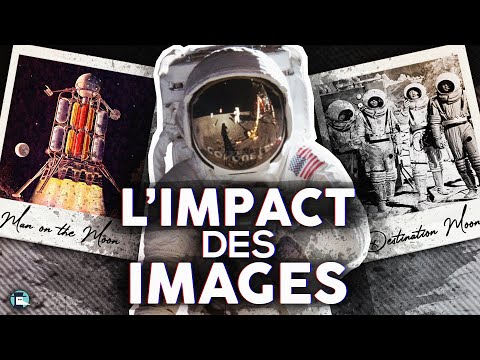
Les inspirations inattendues de la conquête spatiale
Merci à Pandacraft d'avoir sponsorisé cette vidéo ! Le code NOTABENE vous donne une réduction de 15% sur les abonnements "Explore" et "Makers", le code est valable 1 mois, jusqu'au 28/09 inclus, donc si ça vous intéresse, n'hésitez pas à aller faire un tour sur leur site : https://bit.ly/notabene-pandacraft22
« Un petit pas pour l’homme, un grand pas pour l’humanité… », on connaît tous ces mots attribués à Neil Armstrong. On résume souvent toute cette odyssée spatiale à travers ce petit enregistrement. Un son… mais aussi une photographie, celle du premier pas sur la lune ! Mais comment a-t-on pu parcourir la lune ? Quel est le long processus qui a abouti à cette image célèbre ? Et si je vous disais que tout a commencé par… une image, justement ! Difficile à croire, mais pas impossible !
? Écriture : Benjamin Brillaud et Arthur de Forges de Parny
? Montage : Dead Will / Wilfried Kaiser https://www.youtube.com/c/DEADWILL
Sommaire :
0:00 : Pandacraft
1:56 : Introduction
3:27 : La fusée en image
5:56 : USA vs URSS : la conquête spatiale
8:36 : Objectif : convaincre le public d'aller dans l'espace
12:46 : Conclusion
————————————————————————————————————————————
➤➤➤ Sources en fin de description
————————————————————————————————————————————
?Pour s’abonner et soutenir ma chaîne?
https://www.youtube.com/channel/UCP46_MXP_WG_auH88FnfS1A/join
?Chaîne Nota Bonus? https://www.youtube.com/channel/UCrbbgYjbrXVYRM_iRGEDqFw
————————————————————————————————————————————
?Découvrez ma boutique en ligne?
➜ https://nota-bene.creator-spring.com/
————————————————————————————————————————————
?Vous pouvez acheter mes ouvrages en suivant ce lien ?
➜ https://www.notabenemovies.com/ouvrages/
————————————————————————————————————————————
?Rejoignez-moi sur les réseaux !?
➜ Twitch : https://www.twitch.tv/notabenemovies
➜ Facebook : http://facebook.com/notabenemovies
➜ Twitter : https://twitter.com/NotaBeneMovies
➜ Instagram : https://www.instagram.com/notabenemovies
➜ TikTok : https://www.tiktok.com/@notabenemovies
➜ Tipeee : https://www.tipeee.com/nota-bene
➜ Site internet : https://www.notabenemovies.com/
➜ Podcast : https://www.notabenemovies.com/podcasts/
————————————————————————————————————————————
➤➤➤ Pour en savoir plus :
————————————————————————————————————————————
BIBLIOGRAPHIE :
- Michael J. Neufeld, Von Braun. Dreamer of Space, Engineer of War, New York, Vintage Books, 2008.
- A. Gunthert, “La Lune est pour demain. La promesse des images”, in A. Dierkens, G. Bartholeyns, T. Golsenne (dir.), La Performance des images, éd. de l’université de Bruxelles, 2010, p. 169-178 (en ligne: http://culturevisuelle.org/icones/470).
- https://www.nasa.gov/centers/marshall/history/vonbraun/bio.html
- http://dreamsofspace.blogspot.com/
- https://www.anecdotes-spatiales.com/la-collaboration-entre-wernher-von-braun-et-le-magazine-colliers/
- https://www.rmastri.it/spacestuff/wernher-von-braun/colliers-articles-on-the-conquest-of-space-1952-1954/
- https://www.smithsonianmag.com/history/wernher-von-brauns-martian-chronicles-9845747/
- http://www.fabiofeminofantascience.org/COLLIERS/COLLIERS1.html
- https://dreamsofspace.blogspot.com/2012/03/colliers-march-22-1952-man-will-conquer.html
SOURCES
- Jeanne Bendick, The First Book of Space Travel, F. Watts, 1953.
- Arthur C. Clarke, L’Homme et l’Espace (trad. de l’anglais par S. Ouvaroff), Time-Life, 1965.
- Collier’s, n° 22 mars 1952, p. 22-39/65-74; 18 octobre 1952, p. 51-60; 25 octobre 1952, p. 38-48; 28 février 1953, p. 40-48; 7 mars 1953, p. 56-63; 14 mars 1953, p. 38-44; 27 juin 1953, p. 33-35/38-40; 30 avril 1954, p. 21-29.
- Hergé (Georges Rémi), On a marché sur la Lune, Tournai, Casterman, 1954.
- Earl Oliver Hust, The Big Book of Space, New York, Grosset & Dunlap, 1953.
- Willy Ley, Chesley Bonestell, Conquest of Space, New York, Viking Press, 1949 (traduction française par Henri Daussy, La Conquête de l’espace, Lausanne, Guilde du Livre, 1952).
- Cornelius Ryan (éd.), Across The Space Frontier, New York, Viking Press, 1952.
- Cornelius Ryan (éd.), Conquest of the Moon, New York, Viking Press, 1953.
FILMOGRAPHIE
- Destination Moon, Irving Pichel (réal.), George Pal (prod.), Technicolor, USA, Eagle Lion Classics, 91′, 1950.
- Man in Space (TV, épisode de Disneyland, diffusé par ABC, 9 mars 1955), Ward Kimball (réal.), USA, Walt Disney Production, 50′, 1955.
https://www.youtube.com/watch?v=WFXza9RH7-E&t=1360s
- Man and the Moon (TV, épisode de Disneyland, diffusé par ABC, 28 décembre 1955), Ward Kimball (réal.), USA, Walt Disney Productions, 50′, 1955.
https://www.youtube.com/watch?v=S_N3EYMgya4
- 2001. A Space Odyssey (distr. fr.: 2001. Odyssée de l’espace), Stanley Kubrick (réal.), USA, Metro Goldwin Mayer, Technicolor, 140′, 1968.

If you're tired of traditional history shows that present dry facts and dates, then you're in for a treat with "Herodot'com." This engaging series takes viewers on a whimsical journey through history, blending educational content with humor and entertainment. With its first season featuring 110 episodes, each one brimming with fascinating insights and laugh-out-loud moments, it's no wonder this show has quickly become a favorite among history buffs and casual viewers alike.
In Season 1, our charismatic host dives deep into both classic films and pivotal historical figures. Episode by episode, he critiques iconic movies like "Braveheart" and "The Last Samurai," dissecting their historical inaccuracies while offering context that makes learning about history enjoyable. The witty commentary is wrapped in colorful storytelling that keeps you engaged from start to finish. Fans of shows like "C'est une autre histoire" or "Nota Bene" will find familiar comfort in this blend of education and entertainment but will appreciate the unique twist that "Herodot'com" brings to the table.
What sets "Herodot'com" apart is its ability to make learning fun through satire and parody. In Episode 1, titled "Salut Camarades!", our host hilariously critiques Mel Gibson's epic film "Braveheart." He highlights not only the glaring historical errors but also provides entertaining anecdotes about Scottish history that are sure to make you chuckle. This clever approach serves as an invitation to viewers to explore beyond what they see on screen; it encourages critical thinking about how history is portrayed in media.