- Original release
- Previous episode S09E734 - Know An Alcoholic? Alcohol Science on the Brain
- Number S09E735
- Genre Documentary
-
External links
YouTube page
-
Last update
18 novembre 2026 - 08:48
on 11 databases
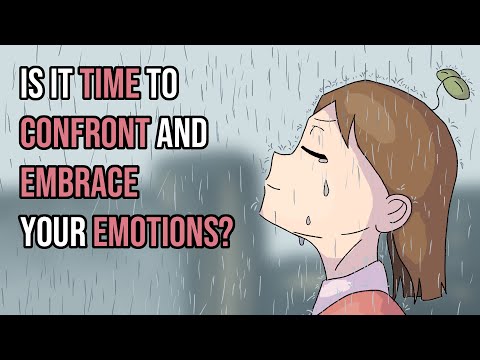
4 Signs You're Repressive Coping, NOT Being Strong
Repressive coping is a psychological defense mechanism that individuals may employ to manage and minimize feelings of anxiety, stress, or distressing emotions. It involves consciously or unconsciously avoiding or suppressing thoughts, memories, or emotions that are perceived as threatening or uncomfortable.
In the realm of mental health and psychology, it's vital to distinguish between being strong and repressively coping. In this video, we will be sharing four telltale signs that you might be engaging in repressive coping mechanisms to help you gain a deeper understanding of the impact on your mental well-being.
Let's raise awareness about mental health and unhealthy coping, empowering you to embrace healthier and more constructive ways of navigating life's challenges.
#mentalhealth #copingmechanism
Wnat more mental health content? Check out this video on how to have better mental health: https://youtu.be/IY2y6kH745A
Writer: Quintessa Monterroso
Editor: Rida Batool
Script Manager: Kelly Soong
Voice Over: Amanda Silvera (http://www.youtube.com/amandasilvera )
Animator: Jeremy Yao
Youtube Manager: Cindy Cheong
Grab PSI plushy here: https://psych2go.shop/products/psych2go-plushie
Discount code: "Loyalty" to get 15% off. Only first 50 people.
Official Discord: https://discord.gg/EsWEvrJ
Provide Feedback for this video: https://forms.gle/B1JAxZKn9XvJpXUQ7
References
Attard, A. (2020). Repressing emotions: 10 Ways to reduce emotional avoidance. Positive Psychology. positivepsychology.com/repress-emotions/
Ertel, A. (2022). How to identify & release repressed emotions. Talkspace. www.talkspace.com/blog/repressed-emotions/
Garssen, B. (2007). Repression: Finding our way in the maze of concepts. Journal of Behavioral Medicine, 30(6), 471–481. doi.org/10.1007%2Fs10865-007-9122-7
Patel J, Patel P. Consequences of Repression of Emotion: Physical Health, Mental Health and General Well Being. International Journal of Psychotherapy Practice and Research. 2019;1(3):16-21. doi:10.14302/issn.2574-612x.ijpr-18-2564.openaccesspub.org/ijpr/article/999.

In an age where information overload is rampant, navigating through the noise can be a daunting task. Enter **Vox**, a captivating series that not only breaks down complex topics but also presents them in an accessible manner. With its unique approach to storytelling through video content, Vox serves as a beacon for those seeking clarity in today’s chaotic world. If you’re looking for a series that informs while it entertains, look no further than Vox.
The brilliance of Vox lies in its ability to distill complicated subjects into digestible segments. Each episode tackles pressing issues—from politics and science to culture and history—providing viewers with insights that are both enlightening and thought-provoking. The show’s hosts, including Ezra Klein and Melissa Bell, guide discussions with authority and charisma, ensuring that audiences remain engaged while learning about vital topics like climate change and healthcare policy.
For fans of educational programming similar to **Vsauce** or **Psych2Go**, Vox delivers a comparable experience with its focus on factual accuracy and compelling narratives. Much like these shows, Vox invites viewers into deep dives through creative visuals and relatable explanations that resonate even with those who may not have prior knowledge on the subject matter. This makes it ideal for anyone eager to expand their horizons without feeling overwhelmed.