- Original release
- Previous episode S01E67 - Où va le temps dans un Trou noir ?
- Number S01E68
-
External links
YouTube page
-
Last update
24 juillet 2023 - 12:10
on 11 databases
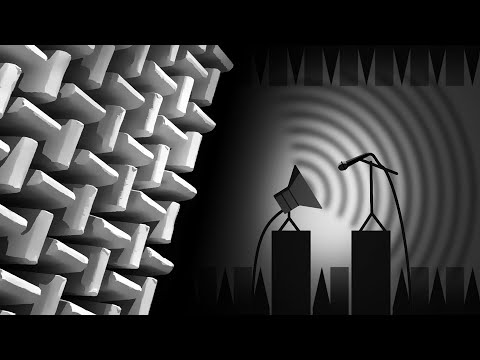
Les Salles anéchoïques
Peut-on créer une pièce sans réverbération ? Comment se forme un écho ? A quoi sert une salle anéchoïque ? Toutes ces réponses en 12 minutes !
0:00 - Introduction
2:48 - Construire une salle anéchoïque
5:37 - Les trois salles du LMA
9:55 - Conclusion
_________________________________________________
Pour découvrir l’entretien complet avec Cédric Pinhède, voici le lien vers la vidéo sur la
chaîne d’EchoSciences Provence-Alpes-Côte d'Azur : https://youtu.be/Et_1J3O_pf8
Vidéo réalisée pour Echosciences Provence-Alpes-Côte d'Azur https://www.echosciences-paca.fr avec Cédric Pinhède (Laboratoire de Mécanique et Acoustique de Marseille). Sur une idée originale de Play Azur. Vidéo coordonnée par Gulliver https://www.gulliver-sciences.fr et Play Azur https://www.playazur.fr. Voir aussi : https://www.echosciences-paca.fr/articles/video-echoscientifique-n-19
_________________________________________________
Si vous voulez voir d'autres vidéos, n'hésitez pas à vous abonner à la chaîne YouTube : http://youtube.com/ScienceClic
Et si cette vidéo vous a plu, vous pouvez la partager sur les réseaux sociaux !
Pour me soutenir sur Tipeee : http://tipeee.com/ScienceClic
ou gratuitement sur uTip : http://utip.io/ScienceClic
Page Facebook : http://facebook.com/ScienceClic
Twitter : http://twitter.com/ScienceClic
Instagram : http://instagram.com/ScienceClic
Alessandro Roussel,
Pour plus d'informations: http://www.alessandroroussel.com
_________________________________________________
ScienceClic English : http://youtube.com/ScienceClicEN
ScienceClic Español : http://youtube.com/ScienceClicES

In a world where knowledge is power, the TV series "String Theory" emerges as a beacon for curious minds eager to delve into the wonders of science. This unique show is not just another series; it’s a vibrant platform where seven talented content creators unite to awaken your scientific curiosity. Whether you're fascinated by astronomy, societal issues, or the latest inventions, "String Theory" promises to deliver intriguing insights that will leave you wanting more.
The beauty of "String Theory" lies in its diverse approach to education and entertainment. Each episode features a different creator from the lineup, including popular figures like @athenasol_YT and @monsieurlechat94, bringing their own flair and expertise into the mix. With a staggering 619 episodes already available, viewers are treated to a plethora of content ranging from hands-on experiments to thought-provoking discussions on various scientific phenomena. The show effectively combines elements from other science-based series like "ScienceClic" and "Experimentboy," while maintaining its unique identity that sets it apart in the vast landscape of educational media.
One of the standout aspects of "String Theory" is its ability to engage audiences through relatable topics presented in an accessible manner. For instance, Episode 3 introduces Leka, a robot designed specifically for children with autism – an innovative intersection of technology and compassion that highlights how research can pave new paths for societal betterment. By addressing real-world applications and implications of scientific discoveries, this show captivates viewers both young and old, making complex ideas digestible without sacrificing depth.