- Original release
- Previous episode S45E01 - Vom Geben und Nehmen
- Number S45E02
- Episode runtime 45 minutes
- Country Germany
- Original language German
- Genres Crime, Drama
-
External links
TheTVDB page
IMDB page
TheMovieDB page -
Last update
22 août 2026 - 18:15
on 11 databases
Sinfonie der Großstadt
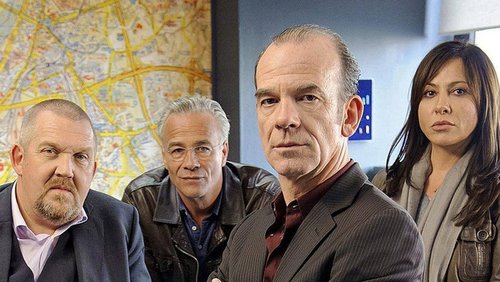
Die SOKO München muss den Mord an dem Straßenmusiker Peter Lindau aufklären, der in der Nähe des größten Konzertsaales der Stadt umgebracht wurde: in der Fußgängerzone.
Erste Ermittlungen führen zu dem Leiter der Stadtinformationen, Stephan Allgeier, der in einem Casting die Straßenmusiker auswählt. Anscheinend ist das Mordopfer hinter einen Betrug Allgeiers gekommen. Musste Peter Lindau deshalb sterben?
Ein weiterer Hinweis führt die Kommissare zu Alexis Wörner, einem Restaurantbesitzer im Glockenbachviertel, der wegen Peter Lindaus "Gedudel" Angst um sein Geschäft hatte und sich von dem Musiker tyrannisiert fühlte.
Die SOKO München taucht weiter in die Welt der Straßenmusikerszene ein. Dabei vertraut sich Kriminalhauptkommissarin Katharina Hahn immer mehr Peter Lindaus Kollegen Edgar Seiler an, der die Anonymität der Straßenmusikerwelt schätzt. Über die Recherche seiner Vergangenheit kommt die SOKO München dem wahren Mordmotiv auf die Spur. (Text: ZDF)

Since its groundbreaking debut in 1971, Polizeiruf 110 has solidified its place as one of Germany's most beloved crime series. Originally produced by East German television (DFF) before being adopted by ARD institutions after reunification, this iconic show has captivated audiences with its intricate plots and compelling characters for over five decades. The series serves as a fascinating counterpart to West Germany's Tatort, offering viewers an enthralling blend of crime, drama, mystery, and thriller elements that keep them on the edge of their seats.
Set against the backdrop of a divided Germany and later reunified nation, Polizeiruf 110 offers more than just thrilling police investigations; it provides a unique lens into the social and political landscape of its time. This depth is one reason why it quickly became a crowd favorite and continues to resonate with audiences worldwide. With a staggering 55 seasons and 425 episodes under its belt, it's clear that Polizeiruf 110 is not just another TV show—it's an enduring cultural phenomenon.
The show's longevity can be attributed to its compelling characters who bring each episode's complex narratives to life. Viewers are introduced to an ensemble cast featuring standout performances from Peter Borgelt as Peter Fuchs, Sigrid Göhler as Vera Arndt, Jaecki Schwarz as Hauptkommissar Herbert Schmücke, Wolfgang Winkler as Hauptkommissar Herbert Schneider, among others. Their portrayals create rich character arcs that draw you into their world—a world filled with suspense and moral dilemmas.