- Original release
- Previous episode S00E116 - The SpongeBob Movie: Sponge on the Run
- Number S00E117
- Episode runtime 23 minutes
- Country United States
- Original language English
- Genres Fantasy, Family, Comedy, Children, Animation
-
External links
TheTVDB page
IMDB page
TheMovieDB page -
Last update
19 septembre 2026 - 21:15
on 11 databases
S Video : The Patrick Star Fan Favorites Special

Unspeakable - YouTube star and Patrick Star superfan - is counting down the greatest Patrick Star scenes of all time.

Spoiler warning for the Season 17 finale of SpongeBob SquarePants. After 17 seasons and a staggering 753 episodes, it would be easy to assume that SpongeBob SquarePants has already exhausted every possible variation on jellyfishing, Krabby Patties, boating school disasters, and Squidward’s eternal suffering. And yet the Season 17 finale, which aired on 2026-08-28, felt like a confident reminder that this underwater comedy still has an elastic sense of possibility. Rather than trying to reinvent the show from the sand up, the finale leaned into what has always made Bikini Bottom work: absurd escalation, surprisingly sincere friendships, and a cast of characters who can turn even the smallest inconvenience into full-blown cartoon mythology.
What worked best in the finale was the way Season 17’s recurring ideas came together without making the episode feel overly serialized. This season had already played with transformation and identity in several memorable ways: SpongeBob accidentally breaking a witch’s curse, Larry the Lobster copying Patrick after discovering his secret super strength, the Conch Street houses coming alive to rescue Patrick’s rock, and Sandy rebuilding SpongeBob with robotic parts after his patty-flipping arm injury. The finale smartly echoed those ingredients — curses, strength, living spaces, body upgrades, and out-of-control problem solving — while still feeling like a classic standalone SpongeBob adventure. That balance is crucial. Longtime fans get the pleasure of recognition, while casual viewers can still jump in and laugh at the madness.
The emotional center, as usual, belonged to SpongeBob himself. Tom Kenny’s performance continues to be the engine of the series, and Season 17’s closing episode gave him room to play both the manic optimist and the genuinely vulnerable friend. SpongeBob’s greatest strength has never been intelligence, physical power, or even fry-cook perfection — though he would certainly argue for the last one. His superpower is sincerity. In the finale, the comedy landed because his chaos came from wanting to help, not from selfishness. That distinction is why the character still works for children discovering him for the first time and adults who have been quoting him for decades.
Patrick, voiced by Bill Fagerbakke, also had one of the finale’s strongest emotional beats. Season 17 repeatedly underlined how Patrick’s nonsense can accidentally become wisdom, whether through his unexpected strength or his strangely sacred relationship with his rock. The finale used that dynamic well: Patrick’s attachment to the simple things in life again became more than a joke. In a show built on ridiculousness, Patrick often represents a kind of pure, unfiltered contentment. The finale understood that, and it gave the character enough space to be hilarious without reducing him to a single punchline.
Squidward’s role in the finale was equally important. Rodger Bumpass has spent years turning Squidward’s exhaustion into an art form, and the Season 17 ending once again found comedy in the gap between what Squidward wants — peace, culture, dignity, silence — and what Bikini Bottom gives him. But the best recent SpongeBob episodes know that Squidward is funnier when there is a tiny flicker of reluctant affection beneath the misery. The finale did not need to turn him into a sentimental hero, but it did use his exasperation as a reminder that the show’s ensemble is a weird family. Squidward may complain, but his presence on Conch Street matters.
Mr. Krabs and Plankton also remained essential to the finale’s comic machinery. Clancy Brown’s Mr. Krabs is still a masterclass in exaggerated greed, and Mr. Lawrence’s Plankton remains one of animation’s great tiny villains. The finale’s use of their rivalry worked because it did not merely repeat the “steal the formula” formula. Instead, it treated their obsession as part of Bikini Bottom’s ecosystem: predictable, destructive, and somehow comforting. At this stage of the series, viewers do not watch Krabs and Plankton because they expect either of them to change permanently. We watch because their inability to change is the joke — and sometimes, weirdly, the heart of it.
Sandy Cheeks, voiced by Carolyn Lawrence, gave the finale another strong layer. Season 17’s earlier robotic-upgrade story was a reminder that Sandy is often the bridge between wild fantasy and science-fiction chaos, and the finale benefited from that energy. Whenever Sandy appears, the show gains a different rhythm: more invention, more competence, and often more danger, because competence in Bikini Bottom usually means building something that will immediately go wrong. Her role helped the finale feel bigger without losing the handmade silliness that defines SpongeBob SquarePants.
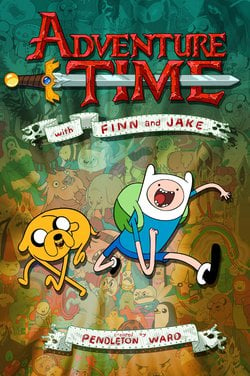
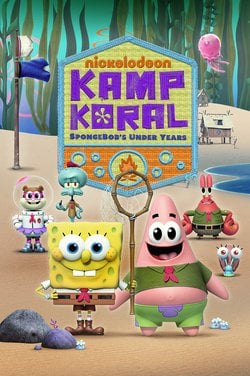
For viewers who follow animated comedy broadly, Season 17’s finale also highlights why SpongeBob continues to sit comfortably alongside shows like Adventure Time, Kim Possible, Fish Hooks, The Wonderful World of Mickey Mouse, and even its own extended universe cousin Kamp Koral: SpongeBob’s Under Years. Many animated series build elaborate lore; SpongeBob builds emotional familiarity. Bikini Bottom is not consistent because its rules make sense. It is consistent because its characters react in ways we recognize. SpongeBob will care too much. Patrick will misunderstand everything. Squidward will suffer. Krabs will monetize the disaster. Plankton will scheme. Sandy will engineer a solution that may or may not make things worse. That rhythm is why the finale felt satisfying rather than merely nostalgic.
As for what the finale sets up for the future, Season 17 ends with the sense that the writers are still interested in stretching the format. The living houses episode opened the door to more stories where Bikini Bottom’s environment becomes an active character. The curse storyline suggests there is still room for fairy-tale and supernatural absurdity. Sandy’s tech-heavy episodes point toward more body-swap, robot, and invention-driven plots. And Larry’s imitation of Patrick proves the show can still find new comedy in unexpected character pairings. If future seasons continue in this direction, the best path forward may not be bigger continuity, but bolder combinations of characters who rarely get paired together.
On the renewal front, there is no cancellation to report from the information currently available. An official Season 18 status should still be watched closely through Nickelodeon and platform updates, but it is difficult to imagine SpongeBob SquarePants disappearing quietly after a finale this energetic and after such a long cultural run. The franchise remains one of the most recognizable names in family animation, and its availability on Prime Video gives both longtime fans and new viewers an easy way to keep up with the underwater chaos.
Ultimately, the Season 17 finale worked because it trusted the fundamentals. It did not need to make SpongeBob darker, louder, or more “adult” to justify its longevity. It simply reminded us that silliness can be durable when it is built on character, timing, and a world flexible enough to survive anything. For fans who watched the finale, this was not just another ending; it was a reaffirmation that Bikini Bottom still has stories to tell.
Conclusion: If the Season 17 finale left you wanting to revisit key episodes, track future announcements, or finally organize your journey through all 17 seasons, now is the perfect time to add SpongeBob SquarePants to your BetaSeries account. BetaSeries is a simple, powerful, and free way to follow the series, mark episodes as watched, discover similar animated comedies, and make sure you never miss SpongeBob, Patrick, Squidward, Sandy, Mr. Krabs, or Plankton’s next adventure.