- Original release
- Previous episode S01E66 - Supersized Slow-Mo Slinky Drop
- Number S01E67
- Country United States
- Genre Special Interest
-
External links
YouTube page
-
Last update
5 juillet 2023 - 09:05
on 11 databases
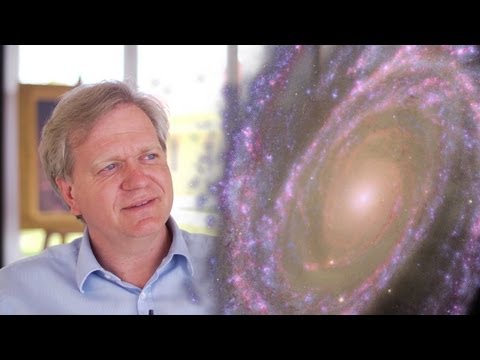
Nobel Prize Winner Brian Schmidt - Physics 2011
The Nobel Prize for physics in 2011 was awarded to Brian Schmidt, Adam Riess, and Saul Perlmutter for discovering that the universe is expanding at an accelerating rate. This finding was completely unexpected because it was thought that gravity should slow the expansion of the cosmos. The best current explanation of why the universe is accelerating is that there is some energy tied to empty space which pushes matter apart. This 'Dark Energy' makes up 73% of the universe but is very difficult to detect. Hopefully a better understanding of it will lead to a unification of our theories of gravitation and quantum mechanics.
Images courtesy of NASA - NASAimages.org

In today's digital age, where information is at everyone's fingertips, it's easy to get swept away by seemingly unbelievable content that inundates our screens daily. Whether it's a mind-boggling viral video or an uncanny photo circulating online, distinguishing fact from fiction has become increasingly challenging. Enter 'Captain Disillusion,' a TV series that not only entertains but educates viewers on deciphering the truth behind visual fakery.
The first season of 'Captain Disillusion' introduces us to a world where appearances are often deceptive, and what you see isn't always what you get. Our titular hero, Captain Disillusion, steps up to guide audiences through this labyrinth of digital deception with his signature blend of humor and analytical prowess. With 106 episodes in its debut season, there's no shortage of content for eager minds ready to learn about the intricate art of debunking.
Each episode serves as a masterclass in skepticism and critical thinking, starting with Episode 1, where Captain Disillusion confronts the bizarre concept of violent penguins and tackles attention-seeking visual effects creators. As we move into Episode 2, the captain turns his vectorscope towards Japan's digital curiosities, unraveling their mysteries with precision.