- Original release
- Previous episode S01E350 - The 100 Prisoners Puzzle
- Number S01E351
- Country United States
-
External links
YouTube page
-
Last update
26 octobre 2022 - 16:01
on 11 databases
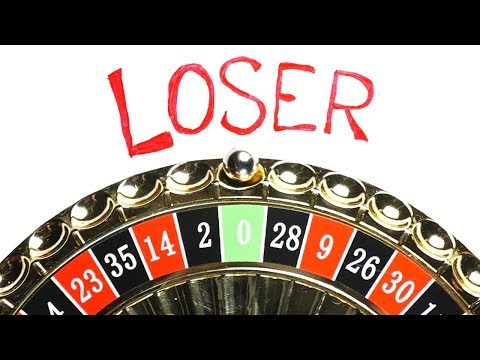
The Game You Win By Losing (Parrondo's Paradox)
While working on the interplay between thermodynamics and information theory, physicist Juan Parrondo realized that a system of losing games could actually produce a winning result. And it isn’t just by playing them in a highly-strategic way; it’s even possible for two guaranteed losers to generate a winner when played randomly.
At the heart of that counterintuitive conclusion is a test of our understanding of probability and relationships between events. From the simplest money-based games and coin flip scenarios to theoretical perpetual motion machines like the Brownian ratchet and flashing Brownian ratchet, Parrondo’s Paradox explores elements of game theory that are inspiring research in fields like biogenetics, finance, and evolutionary biology.
*** SOURCES ***
Finite Math -- Markov Chains
https://www.youtube.com/watch?v=tYaW-1kzTZI
https://www.youtube.com/watch?v=afIhgiHVnj0
Derek Abbot, Peter Taylor, and Juan Parrando, “Parrondo's Paradoxical Games and the Discrete Brownian Ratchet”
https://www.academia.edu/269127/Parrondos_Paradoxical_Games_and_the_Discrete_Brownian_Ratchet
Stan Wagon’s Parrondo Paradox Demonstration
http://demonstrations.wolfram.com/TheParrondoParadox/
Abhijit Kar Gupta and Sourabh Banerjee, “Parrondo’s Paradox: New Results and New Ideas”
https://arxiv.org/ftp/arxiv/papers/1602/1602.04783.pdf
New York Times, “Paradox In Game Theory: Losing Strategy That Wins”
https://www.nytimes.com/2000/01/25/science/paradox-in-game-theory-losing-strategy-that-wins.html
S. N. Ethier and Jiyeon Lee, “The flashing Brownian ratchet and Parrondo’s paradox”
https://royalsocietypublishing.org/doi/full/10.1098/rsos.171685
Andrew Gelman and Deborah Nolan, “You can load a die but you can’t bias a coin”
https://www.stat.berkeley.edu/~nolan/Papers/dice.pdf
*** LINKS ***
Vsauce2 Links
Twitter: https://twitter.com/VsauceTwo
Facebook: https://www.facebook.com/VsauceTwo
Hosted and Produced by Kevin Lieber
Instagram: http://instagram.com/kevlieber
Twitter: https://twitter.com/kevinlieber
Podcast: https://www.youtube.com/thecreateunknown
Research And Writing by Matthew Tabor
https://twitter.com/TaborTCU
Editing by Aspect Science
https://www.youtube.com/channel/UCyi06SeKkiwoAzFVmQtDtfg
Huge Thanks To Paula Lieber
https://www.etsy.com/shop/Craftality
Get Vsauce's favorite science and math toys delivered to your door!
https://www.curiositybox.com/
Select Music By Jake Chudnow: http://www.youtube.com/user/JakeChudnow
#education #vsauce2

In the vast universe of online entertainment, few shows have made as much impact as "=3". Hosted initially by the charismatic Ray William Johnson, this YouTube web series quickly became a staple for comedy lovers around the globe. With its unique format that combined viral video commentary with sharp wit, "=3" captured the hearts of millions. As it evolved through various hosts like Robby Motz and Kaja Martin, its legacy continued to influence internet culture in profound ways.
The show's inception can be traced back to a time when YouTube was burgeoning with creativity and innovation. Ray William Johnson's dynamic presence and clever humor created an unmatched viewing experience that resonated with audiences seeking laughter and entertainment. His ability to dissect viral videos with humorous insights made "=3" not just a show but a weekly ritual for many fans.
After Ray stepped down in March 2014, Robby Motz took over hosting duties, bringing his own flair while maintaining the essence of what made "=3" so beloved. Although some viewers were skeptical at first, Robby's charm eventually won them over, keeping the fan base engaged and entertained. However, transitions are never easy in long-running shows; when Kaja Martin became the host in July 2015, she faced challenges in retaining viewership amidst changing internet trends.