- Original release
- Previous episode S01E427 - The 24 Card Math Game #shorts
- Number S01E428
- Country United States
-
External links
YouTube page
-
Last update
26 octobre 2022 - 16:01
on 11 databases
The Dangerous Science of Eyewitnesses
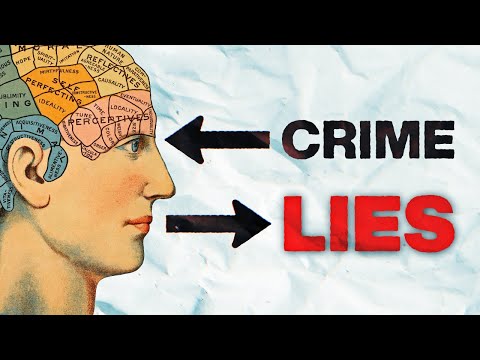
Jennifer Thompson was the perfect witness. She was smart, perceptive, and alert during her attack. She made a conscious effort to note every little detail to help police identify the man who assaulted her. She identified him with 100% confidence in a photo lineup, then during an in-person lineup, and again at the trial. 11 years later, DNA evidence proved that Ronald Cotton, who had been sentenced to life in prison plus 50 years, was entirely innocent. How could she get it so wrong? Why do so many eyewitnesses make mistakes that result in innocent people going to prison for a crime they never committed?
A number of factors conspire to erode the truth. From biological realities of memory and the brain’s propensity to fill in gaps with fiction to procedural errors that unintentionally reinforce a false narrative, it’s hard for witnesses to get it right. All the flaws in eyewitness testimony seem obvious, and most of them are. What’s interesting is how long we’ve known and largely ignored them.
More than a century ago, psychologist Hugo Münsterberg wrote detailed essays about the problems with witnesses, including eviscerating his own memory of being a crime victim. And before that, Hermann Ebbinghaus explained the “forgetting curve” that shows how memory deteriorates and how spaced repetition -- of both fact and fiction -- can cement what’s in our minds.
Despite generations of knowledge about the fragility of eyewitness identification and testimony, there’s still nothing more powerful and persuasive than a witness pointing a finger at a defendant in court. In the end, forensic science saved Ronald Cotton. But for an immeasurable number of victims of eyewitness error throughout humanity’s pursuit of justice, the result has been imprisonment and death -- and the truth is that the problem can’t ever be solved completely.
*** SOURCES & READING ***
“Picking Cotton: Our Memoir of Injustice and Redemption,” by Erin Torneo, Jennifer Thompson-Cannino, and Ronald Cotton: https://www.pickingcottonbook.com/
“What Jennifer Saw,” PBS Frontline (1997): https://www.pbs.org/wgbh//pages/frontline/shows/dna/photos/
“Eyewitness: How Accurate is Visual Memory?” CBS 60 Minutes (2009): https://www.cbsnews.com/news/eyewitness-how-accurate-is-visual-memory/
“Eyewitness Identification Reform,” Innocence Project: https://innocenceproject.org/eyewitness-identification-reform/
*** LINKS ***
Vsauce2:
TikTok: https://www.tiktok.com/@vsaucetwo
Twitter: https://twitter.com/VsauceTwo
Facebook: https://www.facebook.com/VsauceTwo
Talk Vsauce2 in The Create Unknown Discord: https://discord.gg/tcu
Vsauce2 on Reddit: https://www.reddit.com/r/vsauce2/
Hosted and Produced by Kevin Lieber
Instagram: https://instagram.com/kevlieber
Twitter: https://twitter.com/kevinlieber
Podcast: https://www.youtube.com/thecreateunknown
Research and Writing by Matthew Tabor
https://twitter.com/TaborTCU
Editing by John Swan
https://www.youtube.com/channel/UCJuSltoYKrAUKnbYO5EMZ2A
Huge Thanks To Paula Lieber
https://www.etsy.com/shop/Craftality
Thumbnail by Dave Keine
Vsauce's Curiosity Box: https://www.curiositybox.com/
#education #vsauce #crime

In the vast universe of online entertainment, few shows have made as much impact as "=3". Hosted initially by the charismatic Ray William Johnson, this YouTube web series quickly became a staple for comedy lovers around the globe. With its unique format that combined viral video commentary with sharp wit, "=3" captured the hearts of millions. As it evolved through various hosts like Robby Motz and Kaja Martin, its legacy continued to influence internet culture in profound ways.
The show's inception can be traced back to a time when YouTube was burgeoning with creativity and innovation. Ray William Johnson's dynamic presence and clever humor created an unmatched viewing experience that resonated with audiences seeking laughter and entertainment. His ability to dissect viral videos with humorous insights made "=3" not just a show but a weekly ritual for many fans.
After Ray stepped down in March 2014, Robby Motz took over hosting duties, bringing his own flair while maintaining the essence of what made "=3" so beloved. Although some viewers were skeptical at first, Robby's charm eventually won them over, keeping the fan base engaged and entertained. However, transitions are never easy in long-running shows; when Kaja Martin became the host in July 2015, she faced challenges in retaining viewership amidst changing internet trends.