- Original release
- Previous episode S01E371 - The Auction Problem
- Number S01E372
- Country United States
-
External links
YouTube page
-
Last update
26 octobre 2022 - 16:01
on 11 databases
The Stolen Money Game (Pascal's Mugging)
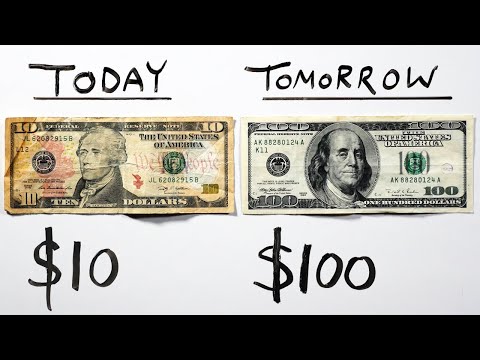
A money game exists in which the potential payoff from being robbed makes perfect mathematical sense… but I won’t play it. Will you?
“Pascal’s Mugging” is derived from the classic philosophical scenario of Pascal’s Wager, which posits that it’s rational for humans to behave as though God exists. If they’re wrong, they don’t lose much; if they’re right, they have an infinite payoff in the afterlife.
The scenario of Pascal’s Mugging stems from Eliezer Yudkowsky’s unique twist on the original wager: what if a thief promised you a tremendous payoff tomorrow for stealing your wallet today? At what point would the near-infinitesimal odds of a criminal rewarding you tomorrow actually warrant you giving them a small amount of money right now?
If we process the situation by using expected value, we could very well be giving up our wallets to criminals who we know without a doubt will disappear forever, and the math would reinforce our decision. The consequences of that mathematical rationalism extend not only into everyday behavior, but also into areas like artificial intelligence. If math can lead us into bad decisions, how can we possibly program AI to act in our best interest?
The next time a creepy baby threatens to steal your wallet, consider the nuanced ramifications in decision theory, probability theory, and utilitarianism -- and to what degree we’ve made progress on the problem over the last 400 years.
*** SOURCES ***
“Pascal’s Mugging,” Nick Bostrom: https://nickbostrom.com/papers/pascal.pdf
“Pascal’s Mugging: Tiny Probabilities of Vast Utilities,” by Eliezer Yudkowsky: https://www.lesswrong.com/posts/a5JAiTdytou3Jg749/pascal-s-mugging-tiny-probabilities-of-vast-utilities
“Pascal’s Muggle: Infinitesimal Priors and Strong Evidence,” by Eliezer Yudkowsky: https://www.lesswrong.com/posts/Ap4KfkHyxjYPDiqh2/pascal-s-muggle-infinitesimal-priors-and-strong-evidence
“Pascal’s Wager,” Stanford Encyclopedia of Philosophy: https://plato.stanford.edu/entries/pascal-wager/
Benn, Alfred W. “Pascal's Wager.” International Journal of Ethics, vol. 15, no. 3, 1905, pp. 305–323. JSTOR, https://www.jstor.org/stable/2376414
*** LINKS ***
Vsauce2:
TikTok: https://www.tiktok.com/@vsaucetwo
Twitter: https://twitter.com/VsauceTwo
Facebook: https://www.facebook.com/VsauceTwo
Talk Vsauce2 in The Create Unknown Discord: https://discord.gg/tyh7AVm
Hosted and Produced by Kevin Lieber
Instagram: https://instagram.com/kevlieber
Twitter: https://twitter.com/kevinlieber
Podcast: https://www.youtube.com/thecreateunknown
Research and Writing by Matthew Tabor
https://twitter.com/TaborTCU
Editing by John Swan
https://www.youtube.com/channel/UCJuSltoYKrAUKnbYO5EMZ2A
Huge Thanks To Paula Lieber
https://www.etsy.com/shop/Craftality
Music by Basswaite: https://linktr.ee/Basswaite
Select Music By Jake Chudnow: https://www.youtube.com/user/JakeChudnow
Get Vsauce's favorite science and math toys delivered to your door!
https://www.curiositybox.com/
Get Vsauce2’s Woven Math t-shirts/hoodies: https://represent.com/store/vsauce2
#education #vsauce #maths

In the vast universe of online entertainment, few shows have made as much impact as "=3". Hosted initially by the charismatic Ray William Johnson, this YouTube web series quickly became a staple for comedy lovers around the globe. With its unique format that combined viral video commentary with sharp wit, "=3" captured the hearts of millions. As it evolved through various hosts like Robby Motz and Kaja Martin, its legacy continued to influence internet culture in profound ways.
The show's inception can be traced back to a time when YouTube was burgeoning with creativity and innovation. Ray William Johnson's dynamic presence and clever humor created an unmatched viewing experience that resonated with audiences seeking laughter and entertainment. His ability to dissect viral videos with humorous insights made "=3" not just a show but a weekly ritual for many fans.
After Ray stepped down in March 2014, Robby Motz took over hosting duties, bringing his own flair while maintaining the essence of what made "=3" so beloved. Although some viewers were skeptical at first, Robby's charm eventually won them over, keeping the fan base engaged and entertained. However, transitions are never easy in long-running shows; when Kaja Martin became the host in July 2015, she faced challenges in retaining viewership amidst changing internet trends.