- Originele uitgave
- Vorige aflevering S02E62 - How To Prevent Hangovers
- Aantal S03E01
-
Externe links
YouTube-bestand
-
Laatste update
24 juillet 2023 - 13:29
op 11 databases
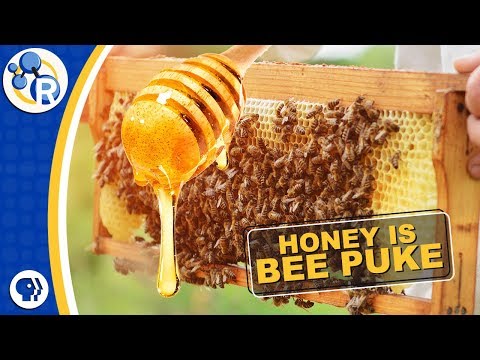
How Do Bees Make Honey?
This week Reactions is taking a look at the chemistry and science that happens in bees stomachs to produce honey. Honey is great. It’s perfect for drizzling over your toast or stirring into your tea, it’s also the special ingredient in your favorite lip balm. What most people don’t know is that during those honeybee's trip from the flower in the field to the jar on your table, honey spends an awful lot of time in a bee’s gut.
Find us on all these places:
Subscribe! http://bit.ly/ACSReactions
Facebook! http://facebook.com/ACSReactions
Twitter! http://twitter.com/ACSReactions
Tumblr! http://tumblr.com/ACSReactions
Move Low - Mic Miller, Wheeler & Leeroy (https://soundcloud.com/liamlry)
Matter of Time by EasyAccess Music
Good Starts by Jingle Punks
Producer:
Elaine Seward
Writer:
Sam Lemonick
Executive Producer:
Adam Dylewski
Scientific consultants:
Mark Winston, Ph.D.
Todd Brethauer
Sophia Cai
Darcy Gentleman, Ph.D.
Sources: Sources:
http://www.compoundchem.com/2014/08/21/chemistryofhoney/
http://www.chm.bris.ac.uk/webprojects2001/loveridge/index-page3.html
http://www.honey.com/honey-at-home/learn-about-honey/how-honey-is-made/
http://www.seriouseats.com/2014/07/how-honey-gets-made-bees.html
Ever wonder why dogs sniff each others' butts? Or how Adderall works? Or whether it's OK to pee in the pool? We've got you covered: Reactions a web series about the chemistry that surrounds you every day.
Reactions is produced by the American Chemical Society.