- Originele uitgave
- Vorige aflevering S03E03 - Why Is Chocolate Deadly for Dogs?
- Aantal S03E04
-
Externe links
YouTube-bestand
-
Laatste update
24 juillet 2023 - 13:29
op 11 databases
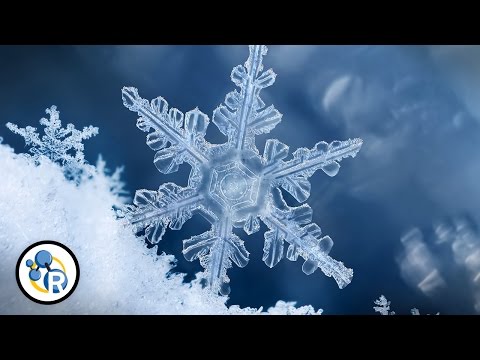
How Do Snowflakes Form?
Snowflake images from Alexey Kljatov: https://www.flickr.com/photos/chaoticmind75/
Each year, PBS Digital Studios conducts an audience survey. It helps us understand what you like and what you would want to see more of. You also get to help PBS pick new shows! It only takes a few minutes but your feedback is extremely valuable to us: to.pbs.org/2022Survey
This week Reactions is taking a microscopic look at snowflake science and how they form. Huge snowstorms and blizzards dump feet of snow from the skies every year, and that means trillions of tiny snowflakes. Through advances in crystallography, scientists have learned a lot about the structure of snowflakes. While they all start pretty much the same, once they start crystallizing, it’s true that no two snowflakes are alike. In fact, the number of possible shapes is staggering.
Find us on all these places:
Subscribe! http://bit.ly/ACSReactions
Facebook! http://facebook.com/ACSReactions
Twitter! http://twitter.com/ACSReactions
Tumblr! http://tumblr.com/ACSReactions
Great infographic on the shapes of snowflakes from Compound Interest:
http://www.compoundchem.com/2014/12/10/snowflakes/
Music: Crookram- Bij De Rest (Creative Commons license)
https://soundcloud.com/crookram
Producer/Writer:
Elaine Seward
Executive Producer:
Adam Dylewski
Scientific consultants:
Jon Nelson, Ph.D.
Sophia Cai
Darcy Gentleman, Ph.D.
Sources:
http://pubs.acs.org/doi/abs/10.1021/cg049685v
https://acswebcontent.acs.org/journalist_resources/snowflakes.pdf
http://www.compoundchem.com/2014/12/10/snowflakes/
Ever wonder why dogs sniff each others' butts? Or how Adderall works? Or whether it's OK to pee in the pool? We've got you covered: Reactions a web series about the chemistry that surrounds you every day.
Reactions is produced by the American Chemical Society.