- Original release
-
Platform release date

- Previous episode S02E01 - Brother
- Number S02E02
- Episode runtime 44 minutes
-
Director
Jonathan Frakes
- Country United States
- Original language English
- Genres Science-Fiction, Drama, Adventure, Action
-
External links
TheTVDB page
IMDB page
TheMovieDB page -
Last update
1 octobre 2026 - 00:18
on 11 databases
New Eden
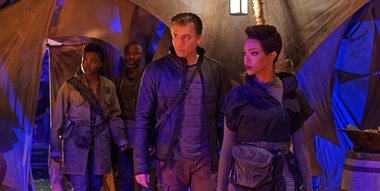
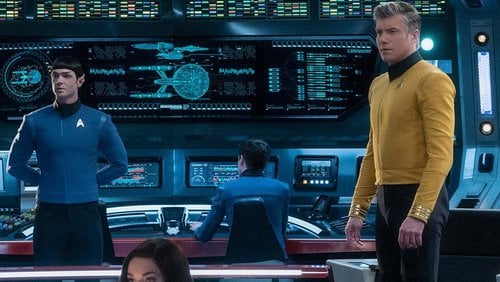
A new signal appears, prompting Stamets’ emotional return to the mycelial network and leading Burnham, Pike and Owosekun to a pre-warp planet, where they face a complex ethical dilemma. Tilly’s overeagerness lands her in trouble but when the planet – and Discovery’s landing party – are threatened, her curiosity may be the one thing that can save them.

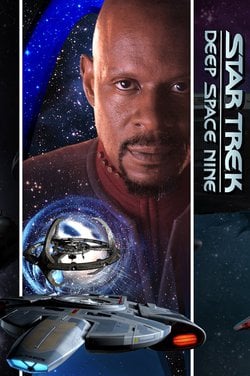
In a universe filled with endless possibilities, "Star Trek: Deep Space Nine" stands out as a beacon for those who seek adventure, drama, and thought-provoking narratives. This series is not just another chapter in the Star Trek saga; it's an exploration of what it means to be part of a diverse universe. Season 1 sets the stage on Terok Nor, now known as Deep Space Nine, where Commander Benjamin Sisko takes charge amidst political tensions and cosmic wonders.
From its inception in 2369, when the Cardassian occupation of Bajor ended, DS9 becomes a melting pot for cultures and ideologies. The station transforms into a hub of activity thanks to a newly discovered stable wormhole leading to the Gamma Quadrant. This strategic location offers new opportunities and challenges that are masterfully woven into each episode's narrative tapestry by showrunners Michael Piller and Rick Berman.
The ensemble cast brings life to this cosmic narrative. Avery Brooks leads as Commander Sisko, whose journey is intricately tied to Bajoran spirituality when he's declared the Emissary to the Prophets—a role that adds layers to his character's development throughout the series. Nana Visitor shines as Major Kira Nerys, offering depth and complexity as she navigates loyalty dilemmas in episodes like "Past Prologue," where her past affiliations come into question.