- Original release
- Previous episode S06E20 - All the Presidents' Heads
- Number S06E21
- Episode runtime 22 minutes
-
Director
Dwayne Carey-Hill
-
Writer
Dan Vebber
- Country United States
- Original language English
- Genres Science-Fiction, Comedy, Animation, Adventure
-
External links
TheTVDB page
IMDB page
TheMovieDB page -
Last update
6 octobre 2026 - 23:15
on 11 databases
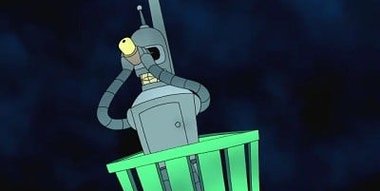
Video : Mobius Dick

Professor Farnsworth sends the Planet Express to find a statue of his crew for the 50th memorial service honoring their disappearance. They end up going through the Bermuda Tetrahedron and find a ton of lost spaceships - including the original Planet Express! They look around the ship and a 4D whale comes by and eats the old ship and the statue. Leela makes it her mission to kill the whale and get revenge, which makes them late for the memorial. Eventually, the whale eats the Planet Express ship and the whole team. The only person who escapes is Zoidberg, who returns to Earth in an escape pod. While inside the whale, Leela meets the original captain of the ship, Lando Tucker, who is now attached to the whale's stomach. Leela ends up being able to control the whale and steers him back to Earth to attend the memorial. Leela coaxes the whale to spit everything out, including the statue and the original crew and kills the whale.

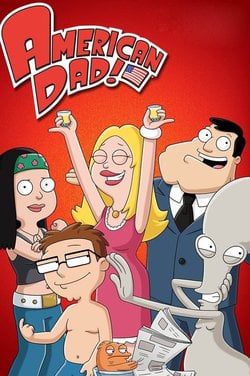
Spoilers ahead for the Season 21 finale of American Dad!, which aired on September 13, 2026. If you watched the finale, you already know that the episode did not try to reinvent the Smith family formula — and that is exactly why it worked. After 21 seasons and 404 episodes, American Dad! remains one of television’s most durable animated comedies because it understands its own engine: Stan Smith’s bottomless confidence, Francine’s underappreciated weirdness, Steve’s vulnerable nerd energy, Hayley’s resistance to family madness, Roger’s infinite capacity for persona-driven chaos, and Klaus’ tragicomic hunger to be taken seriously. The finale leaned directly into that engine with Stan convincing himself he was made for reality TV while Klaus, in peak Klaus fashion, found a way to make his own existence even more pitiful and more hilarious by getting himself “a Klaus.”
What made the Season 21 finale satisfying was not just the absurdity of Stan chasing reality-show glory. American Dad! has always been at its best when Stan’s ego becomes a laboratory for American fantasies: masculinity, fame, patriotism, success, dominance, and the belief that every room is waiting for him to become its main character. Reality TV is a perfect target for him because it rewards self-mythology, humiliation, conflict, and emotional overstatement — all things Stan already produces naturally. The finale understood that Stan does not need to change to become a reality-TV contestant; he already lives like someone waiting for a producer to zoom in on his reaction shot. That made the episode feel less like a parody pasted onto the show and more like a premise that had been sitting inside Stan all along.
The emotional beat underneath the comedy came from the familiar but still effective question: does Stan actually want connection, or does he just want an audience? Season 21 repeatedly returned to that tension. In the pool-party premiere, the Smiths’ domestic life was interrupted by social anxiety, awkward reunions, and a dead rat in the pool — a wonderfully American Dad! symbol for the rot hiding inside cheerful suburban performance. In the flume-ride episode, Stan’s inability to appreciate Francine’s niche interest exposed how often he treats love as something to manage rather than something to experience. In the illness episode, his determination to “power through” became a catastrophic extension of his refusal to admit weakness. By the finale, the reality-TV plot felt like the season’s logical endpoint: Stan trying to convert his flaws into entertainment before realizing, in the show’s typically crooked way, that being watched is not the same as being understood.