- Original release
- Previous episode S17E05 - Marge's Son Poisoning
- Number S17E06
- Episode runtime 25 minutes
-
Director
Nancy Kruse
-
Writer
Stephanie Gillis
- Country United States
- Original language English
- Genres Comedy, Animation
-
External links
TheTVDB page
IMDB page
TheMovieDB page -
Last update
16 octobre 2026 - 07:10
on 11 databases
Video : See Homer Run

Homer is ready for everyone to shower him with gifts on Father’s Day and Marge and the kids go to the mall to obtain the presents. Lisa decides she is going to make something for her father, while Bart purchases the Leather Buddy multi-function knife. Lisa’s heartfelt gift doesn’t go over as well as Bart’s knife and Homer doesn’t immediately do anything to make Lisa feel any better. Bart sees a street sign with his name on it and the bullies entice him into stealing it. Homer makes a lame attempt at making up to Lisa. At school Lisa goes on a rampage. Citing her father as the cause, Principal Skinner and the school psychologist talk with Homer and Marge about what they can do to prevent Lisa from growing up to hate men. Homer becomes the school safety salamander. His initial pathetic attempts at safety don’t change her feelings for her father, until an accident at the intersection of Evergreen Terrace and the unsigned Bart Blvd. The safety salamander rescues all the victims of the accident and Homer is awarded the keycard to the city. Then the mayor comes under fire for the many disasters under his administration and it is decided that a recall election is going to be held. With a number of ridiculous candidates running, Lisa decides that her father, with his popularity as the safety salamander, would be the ideal choice. With Lisa as his campaign manager, everything is going well, until Marge washes his salamander suit. When it shrinks and tears apart is reveals the man underneath, whom nobody is interested in voting for, but at least Homer and Lisa strengthen their relationship. Finally when none of the candidates garner enough votes to take over as mayor, it’s business as usual in Springfield government.

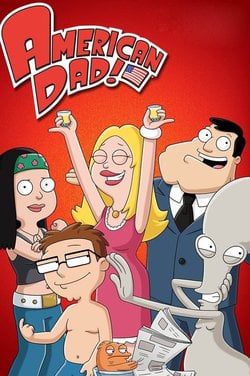
Spoilers ahead for the Season 21 finale of American Dad!, which aired on September 13, 2026. If you watched the finale, you already know that the episode did not try to reinvent the Smith family formula — and that is exactly why it worked. After 21 seasons and 404 episodes, American Dad! remains one of television’s most durable animated comedies because it understands its own engine: Stan Smith’s bottomless confidence, Francine’s underappreciated weirdness, Steve’s vulnerable nerd energy, Hayley’s resistance to family madness, Roger’s infinite capacity for persona-driven chaos, and Klaus’ tragicomic hunger to be taken seriously. The finale leaned directly into that engine with Stan convincing himself he was made for reality TV while Klaus, in peak Klaus fashion, found a way to make his own existence even more pitiful and more hilarious by getting himself “a Klaus.”
What made the Season 21 finale satisfying was not just the absurdity of Stan chasing reality-show glory. American Dad! has always been at its best when Stan’s ego becomes a laboratory for American fantasies: masculinity, fame, patriotism, success, dominance, and the belief that every room is waiting for him to become its main character. Reality TV is a perfect target for him because it rewards self-mythology, humiliation, conflict, and emotional overstatement — all things Stan already produces naturally. The finale understood that Stan does not need to change to become a reality-TV contestant; he already lives like someone waiting for a producer to zoom in on his reaction shot. That made the episode feel less like a parody pasted onto the show and more like a premise that had been sitting inside Stan all along.
The emotional beat underneath the comedy came from the familiar but still effective question: does Stan actually want connection, or does he just want an audience? Season 21 repeatedly returned to that tension. In the pool-party premiere, the Smiths’ domestic life was interrupted by social anxiety, awkward reunions, and a dead rat in the pool — a wonderfully American Dad! symbol for the rot hiding inside cheerful suburban performance. In the flume-ride episode, Stan’s inability to appreciate Francine’s niche interest exposed how often he treats love as something to manage rather than something to experience. In the illness episode, his determination to “power through” became a catastrophic extension of his refusal to admit weakness. By the finale, the reality-TV plot felt like the season’s logical endpoint: Stan trying to convert his flaws into entertainment before realizing, in the show’s typically crooked way, that being watched is not the same as being understood.