- Original release
- Previous episode S21E08 - Oh Brother, Where Bart Thou?
- Number S21E09
- Episode runtime 25 minutes
-
Director
Michael Polcino
-
Writers
Don Payne
Mitchell H. Glazer
- Country United States
- Original language English
- Genres Comedy, Animation
-
External links
TheTVDB page
IMDB page
TheMovieDB page -
Last update
12 octobre 2026 - 07:38
on 11 databases
Thursdays with Abie
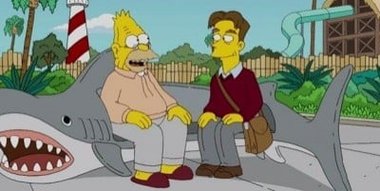
Grampa is sitting on a bench waiting for his family when a thoughtful-looking man named Marshall Goldman approaches him and asks to hear about his life. Grampa tells Goldman about the time he was on a World War II battleship, which was hit by an enemy torpedo, and Goldman, a human-interest columnist, publishes it in The Springfield Shopper. Later, Grampa meets Mitch Albom and shares another story with Goldman for a follow-up article. Homer becomes jealous of Grampa's newfound fame and seeks a surrogate father. But when Homer discovers a draft of Goldman's third story, he must race to find Grampa before it is published and his life is changed forever.

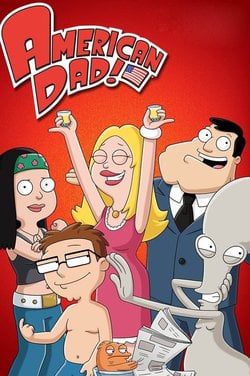
Spoilers ahead for the Season 21 finale of American Dad!, which aired on September 13, 2026. If you watched the finale, you already know that the episode did not try to reinvent the Smith family formula — and that is exactly why it worked. After 21 seasons and 404 episodes, American Dad! remains one of television’s most durable animated comedies because it understands its own engine: Stan Smith’s bottomless confidence, Francine’s underappreciated weirdness, Steve’s vulnerable nerd energy, Hayley’s resistance to family madness, Roger’s infinite capacity for persona-driven chaos, and Klaus’ tragicomic hunger to be taken seriously. The finale leaned directly into that engine with Stan convincing himself he was made for reality TV while Klaus, in peak Klaus fashion, found a way to make his own existence even more pitiful and more hilarious by getting himself “a Klaus.”
What made the Season 21 finale satisfying was not just the absurdity of Stan chasing reality-show glory. American Dad! has always been at its best when Stan’s ego becomes a laboratory for American fantasies: masculinity, fame, patriotism, success, dominance, and the belief that every room is waiting for him to become its main character. Reality TV is a perfect target for him because it rewards self-mythology, humiliation, conflict, and emotional overstatement — all things Stan already produces naturally. The finale understood that Stan does not need to change to become a reality-TV contestant; he already lives like someone waiting for a producer to zoom in on his reaction shot. That made the episode feel less like a parody pasted onto the show and more like a premise that had been sitting inside Stan all along.
The emotional beat underneath the comedy came from the familiar but still effective question: does Stan actually want connection, or does he just want an audience? Season 21 repeatedly returned to that tension. In the pool-party premiere, the Smiths’ domestic life was interrupted by social anxiety, awkward reunions, and a dead rat in the pool — a wonderfully American Dad! symbol for the rot hiding inside cheerful suburban performance. In the flume-ride episode, Stan’s inability to appreciate Francine’s niche interest exposed how often he treats love as something to manage rather than something to experience. In the illness episode, his determination to “power through” became a catastrophic extension of his refusal to admit weakness. By the finale, the reality-TV plot felt like the season’s logical endpoint: Stan trying to convert his flaws into entertainment before realizing, in the show’s typically crooked way, that being watched is not the same as being understood.